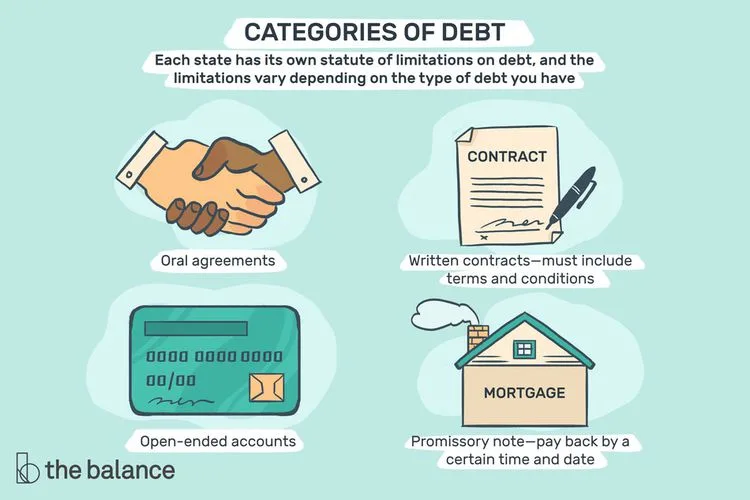
An unpaid business invoice does not come with unlimited time for legal enforcement.
Every state has statutes of limitations that can affect when a creditor may file a lawsuit to enforce a commercial debt. The applicable period can depend on the state, the type of transaction, the contract, the date the claim accrued and sometimes the actions taken after default.
For businesses, the practical lesson is simple:
Do not treat the statute of limitations as your collection timeline.
It is generally an outside legal deadline. A business should normally address seriously overdue receivables long before an account approaches that point.
CA-USA helps businesses recover commercial accounts while documentation is still available, decision-makers can still be identified and meaningful non-legal collection options remain open.

CA-USA provides a low cost, compliant, reputation-safe approach, equipped with all 50-state collections coverage, offering free credit reporting, free pre-litigation check, free bankruptcy scrubs, and zero onboarding fees. Secure – SOC 2 Type II compliant. Over 2,000 online reviews rate us 4.85 out of 5. Over 20 years experience, delivering excellent B2B collection results.
Need a Commercial Collection Agency? Contact us
What Is a Statute of Limitations on Debt?
A statute of limitations establishes the period during which a legal action generally must be commenced.
For a creditor, that means an old account may eventually reach a point where filing a lawsuit to enforce the debt is restricted.
But determining the applicable deadline is not always as simple as looking at the invoice date.
The answer can depend on questions such as:
- Was there a written contract?
- Was the agreement oral or implied?
- Was the transaction for the sale of goods?
- Is there a promissory note?
- What state law governs the agreement?
- When did the payment obligation actually become due?
- Were later payments or agreements made?
- Is there a judgment rather than an unpaid invoice?
- Does another specialized statute apply?
That is why aging commercial accounts should be reviewed individually rather than assigned a limitation period based on a generic chart.
The Statute of Limitations Is Not the Recommended Time to Wait
A four-year limitation period does not mean a creditor should spend three years and eleven months making internal collection calls.
Collection conditions generally become more difficult as accounts age.
Over time:
Documentation gets harder to locate.
Employees who handled the transaction leave, emails disappear and delivery or completion records become harder to reconstruct.
Decision-makers change.
The CFO, owner or accounts-payable contact who knew about the transaction may no longer be with the debtor company.
Disputes become harder to resolve.
A debtor may raise questions years later that could have been answered quickly when the transaction was recent.
The debtor’s financial condition can deteriorate.
A company that was merely slow-paying may later close, sell assets, lose customers or file bankruptcy.
Recovery leverage can decrease.
For those reasons, the statute of limitations should be viewed as a legal boundary—not as an accounts-receivable strategy.
Different States Can Have Very Different Rules
There is no single nationwide statute of limitations for ordinary commercial debt.
For example:
Texas generally provides a four-year period for actions involving debt, including certain open or stated accounts.
Florida currently generally provides five years for legal or equitable actions founded on a written instrument. Different periods can apply to other obligations.
Pennsylvania generally provides four years for many contract actions, but certain qualifying written instruments under seal can potentially have a 20-year limitation period.
For contracts involving the sale of goods, Article 2 of the Uniform Commercial Code is another important consideration. California, for example, generally provides a four-year period for breach of a contract for sale.
New York: In New York, businesses generally have 6 years to take legal action to collect unpaid business contracts and open invoices (and 4 years for the commercial sale of goods), with overdue amounts accruing 9% annual interest by law.
These examples show why simply saying, “Business debt expires after four years,” can be dangerously inaccurate.
The contract, transaction and governing law matter.
When Does the Clock Start?
Another common mistake is focusing only on how many years the statute allows.
The equally important question is:
When did the claim accrue?
Depending on the type of obligation and applicable law, that could involve the date of breach, the payment due date, delivery, default or another event.
For an account containing multiple invoices, the analysis can become even more complicated because different obligations may have different dates.
CA-USA reviews account history and documentation as part of the collection process, but when the precise limitations deadline could determine whether litigation remains available, appropriate legal review may be necessary.
Written Contract vs. Invoice
An invoice by itself does not necessarily answer the statute-of-limitations question.
A stronger commercial file may include:
- Signed contract
- Credit application
- Purchase order
- Personal guarantee
- Invoices
- Statements
- Proof of delivery
- Completion records
- Payment history
- Email correspondence
- Dispute records
- Security agreement
- UCC documentation
Those documents help establish what transaction actually occurred, who owes the money and what terms governed payment.
This becomes increasingly important as an account ages.
Sale-of-Goods Accounts May Follow UCC Rules
Manufacturers, wholesalers, distributors and equipment suppliers frequently sell goods to other businesses.
Those accounts can implicate Article 2 of the Uniform Commercial Code rather than only a state’s general contract limitation statute.
Many UCC sale-of-goods claims use a four-year limitations framework, although the actual transaction and governing state’s law should always be reviewed.
This is another reason CA-USA distinguishes an equipment or inventory account from, for example, an unpaid professional-services invoice.
They may both appear as “accounts receivable,” but legally and commercially they are not necessarily identical.
Can a Payment or Acknowledgment Change the Deadline?
Sometimes.
A later payment, acknowledgment, agreement or promise can affect limitation issues in certain jurisdictions and circumstances.
But the rules vary significantly from state to state.
A creditor should not assume that receiving a small payment automatically restarts the statute of limitations.
Likewise, collection personnel should not represent that an account has been legally revived unless there is a sound basis for doing so.
Where revival or tolling affects the ability to pursue legal action, counsel should determine the effect under applicable state law.
What If the Debtor Files Bankruptcy?
Bankruptcy creates a completely different issue from an ordinary statute of limitations.
A bankruptcy petition generally triggers the federal automatic stay, which can prohibit the continuation or commencement of collection actions against the debtor for pre-bankruptcy claims.
When CA-USA identifies a bankruptcy, ordinary collection activity against the debtor should not simply continue as if nothing changed.
The creditor may instead need to evaluate whether to file a proof of claim or take another appropriate step within the bankruptcy process.
Does an Old Debt Automatically Disappear?
Not necessarily.
The expiration of a limitations period and the existence of the underlying accounting obligation are not always the same issue.
However, an expired limitations period can materially restrict legal enforcement, and additional state laws can affect how older accounts may be handled.
That is why CA-USA does not recommend treating every old commercial debt in exactly the same manner.
The older and more legally sensitive the account becomes, the more important individualized review becomes.
What Should a Creditor Do With an Aging Commercial Account?
1. Identify the Correct Debtor
Confirm the legal company name rather than relying only on a DBA, trade name or accounts-payable contact.
2. Gather the Documents
Preserve the contract, invoices, purchase orders, delivery records, correspondence and payment history before people or systems change.
3. Identify Any Dispute
Determine whether the debtor disputes the entire balance or only a specific invoice, shipment or charge.
A $75,000 account should not necessarily remain unresolved because $8,000 is genuinely disputed.
4. Check for Entity Changes or Bankruptcy
A company that stopped communicating may have changed names, dissolved, merged, relocated or filed bankruptcy.
5. Review Personal Guarantees and Security Documents
If a signed guarantee or security agreement exists, preserve it with the collection file. Do not assume an owner is personally responsible merely because the business owes money.
6. Escalate Before the Account Becomes Severely Aged
Waiting until a possible legal deadline is approaching reduces flexibility.
Professional commercial collection can often begin much earlier without immediately involving attorneys or litigation.
A Commercial Example: Why Waiting Can Cost Leverage
Consider a distributor with a $64,000 unpaid account.
The company has:
- A signed credit application
- Purchase orders
- Delivery confirmation
- Invoices
- Email acknowledgment of the balance
The customer promises payment repeatedly, so the creditor keeps the account internally for several years.
Eventually, the original purchasing manager leaves. The controller changes. The debtor restructures its operations. Old emails have been archived and the account is now approaching a possible legal deadline.
The creditor may still have recovery options—but it is now working with a much more difficult file than it had two years earlier.
The lesson is not to sue faster.
The lesson is to escalate collection earlier.
Collection First. Legal Escalation Only When It Makes Sense.
CA-USA’s commercial recovery process is designed to resolve accounts without immediately turning every delinquent invoice into a lawsuit.
Our process can include:
- Documentation review
- Business verification
- Bankruptcy screening
- Commercial dispute analysis
- Professional contact with decision-makers
- Payment negotiation
- Commercial credit reporting where appropriate
- Review of personal guarantees and relevant UCC information
Attorney referral is considered when reasonable non-legal collection efforts have failed, the account documentation and economics justify further action, and the creditor approves escalation.
Frequently Asked Questions
How long can a business collect an unpaid invoice?
There is no single nationwide period. The applicable statute can depend on state law, contract type, transaction, accrual date and other facts.
Does a four-year statute mean I should wait four years before using collections?
No. A statute of limitations is generally an outside legal deadline, not a recommended collection period. Earlier placement usually provides better documentation and more recovery options.
Is the invoice date always when the statute begins?
Not necessarily. Accrual can depend on the payment obligation, breach, default and applicable law.
Does making a payment restart the statute of limitations?
It may in some jurisdictions and circumstances, but creditors should not assume that every payment automatically restarts the legal period.
Can CA-USA collect an account that is several years old?
Possibly. Account age, governing law, documentation, debtor condition and available recovery methods all matter. Older accounts should be evaluated individually.
What should I send with an older commercial collection account?
Provide the contract or credit application, invoices, statements, purchase orders, delivery records, correspondence, payment history, disputes, guarantees and any relevant security documents.
Do Not Wait for the Legal Deadline to Become the Collection Strategy
The statute of limitations matters because it can ultimately affect a creditor’s enforcement options.
But the best time to address a delinquent commercial account is usually well before that point.
As accounts age, documents disappear, employees change, businesses restructure and recovery becomes more difficult.
CA-USA helps creditors act while the facts are still clear and practical collection options remain available.
The goal is not to rush every account into court. The goal is to recover the money before waiting makes the account unnecessarily difficult.
For broader commercial recovery information, see B2B Commercial Debt Recovery or Assign Accounts to Collections.