In today’s work-from-home environment, it has become more common for companies to provide laptops and other equipment to their employees. While this arrangement helps ensure smooth workflow and productivity, it can become problematic when employees quit or are laid off but fail to return their company-issued devices.
Despite repeated reminders and attempts to recover the equipment, some ex-employees may become unreachable or simply refuse to cooperate. In such situations, hiring a professional collection agency can be an effective strategy for recovering your property—or the associated costs—while protecting your organization’s reputation and legal interests.
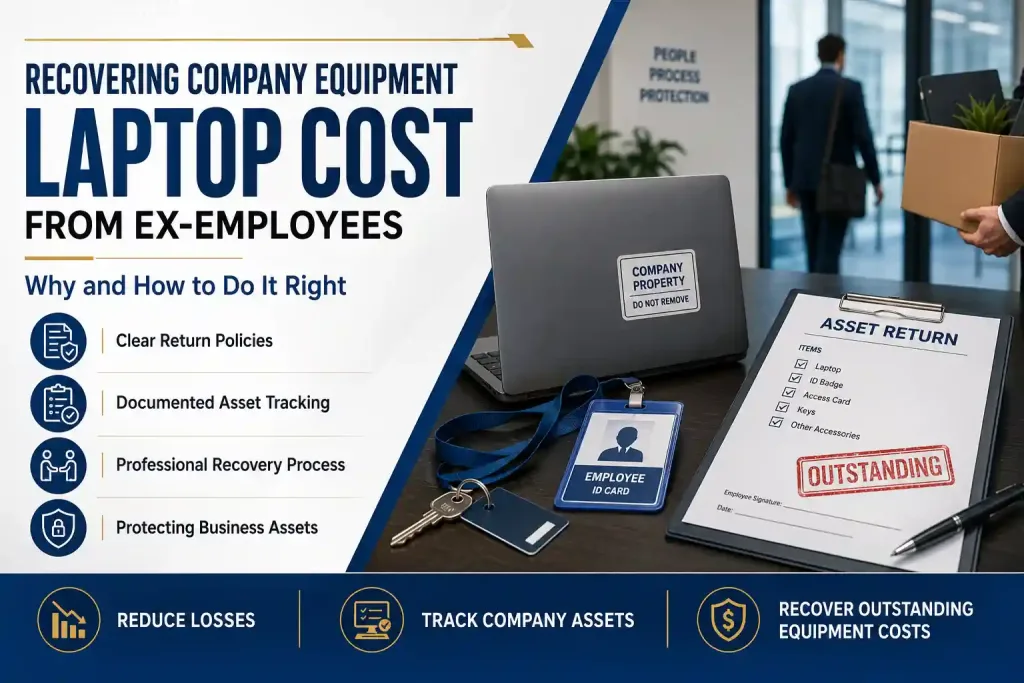
Below is an overview of the risks employers face when attempting to handle returns independently, and how professional collection agencies can help.
The Risks of Handling Recoveries on Your Own
- Reputational Damage
When you directly demand the return of equipment or payment from a former employee, there is a risk of tarnishing your own image. The ex-employee, already disgruntled, may misinterpret your outreach or even claim harassment if they perceive your efforts as overly aggressive. - Legal Complexities
State and federal regulations govern debt collection practices. An employer that attempts to recover equipment or costs without a clear understanding of these laws may inadvertently break them. This can lead to countersuits, especially if the ex-employee is searching for grounds to take legal action against your organization. - Limited Resources
Tracing a former employee who has gone off the radar can be a time-consuming process. Most HR or administrative teams don’t have the specialized tools or time to locate someone who is actively avoiding contact, especially if they’ve moved states or changed phone numbers.
Why Hire a Professional Collection Agency
- Expertise and Legal Compliance
Collection agencies follow strict federal and state regulations, ensuring that every attempt to recover property or costs is conducted ethically and lawfully. By engaging professionals, you reduce your risk of violating debt-collection or privacy laws. Our IT asset recovery workflows strictly adhere to corporate cybersecurity and compliance frameworks—including NIST SP 800-88 guidelines for media sanitization and SOC 2 asset management standards. - Preservation of Reputation
Because a neutral third party is handling the recovery efforts, any negative interaction or confrontation is distanced from your organization. The collection agency’s role shields your reputation from the potential fallout of direct conflict with a former employee. - Emphasis on Professional Consequences
Former employees often respond more seriously to a collection agency. They understand that persistence, credit bureau reporting, and possibly legal measures could follow if they fail to comply. This sense of urgency can accelerate the return of the company’s assets or the repayment of their costs. - Advanced Recovery Techniques
Collection agencies employ specialized tools and techniques such as skip tracing—used to locate individuals who have moved without leaving a forwarding address—and litigation scrubs, which identify potential legal risks. By uncovering the ex-employee’s history and current whereabouts, a collection agency can tailor the recovery strategy while advising you on possible legal pitfalls.
The Process of Recovering Costs via a Collection Agency
Let’s consider a practical example: Suppose the cost of the laptop (or other equipment) is $1,000. As an employer, you can place this amount for collection with a professional agency. From there, the collection agency proceeds as follows:
- Initial Contact and Negotiation
The agency will attempt to contact the ex-employee and request either the immediate return of the equipment or the payment of the $1,000. They will use every legal channel available—phone calls, emails, letters—while adhering to all relevant regulations. - Follow-Up and Persistent Efforts
If initial efforts are ignored, the agency intensifies its efforts. This can include skip tracing if the ex-employee has become unreachable. Depending on state laws and the agency’s agreement with your company, they may also report the delinquency to credit bureaus or send formal notices of potential legal action. - Resolution or Escalation
The collection agency aims for a swift resolution. Once the ex-employee either returns the equipment directly to you or pays the $1,000, the agency retains its fee (based on the agreed-upon rate) and remits the remainder to you. If, however, the ex-employee still refuses to comply, the agency may recommend legal action, which could involve taking the case to court.
Best Practices for Employers
- Clear Equipment Policies
Establish clear guidelines and agreements regarding company-issued equipment from the outset. Make sure employees acknowledge these policies in writing. This not only helps in recovery but also strengthens your position if legal action is necessary. - Prompt Documentation
Once you decide to terminate or accept an employee’s resignation, create a paper trail. Document each request for equipment return, including the dates and methods of communication. Detailed records bolster your case and help the collection agency in their efforts. - Consultation with Legal Counsel
If you are worried that an ex-employee may sue, particularly in cases where they have a history of litigation, consult with legal counsel before taking any collection steps. A well-informed approach can prevent costly lawsuits and reputational damage. - Choose a Reputable Collection Agency
Not all collection agencies are created equal. Research agencies that specialize in equipment recovery or have a track record with corporate clients. Look for firms that emphasize compliance, transparency, and professionalism in their collection processes.
Frequently Asked Questions
Can we just deduct the laptop’s cost from the employee’s final paycheck instead of hiring a collection agency?
In most states, not without a real fight, and in a handful (California, New York, and Massachusetts among them) it’s essentially off the table no matter what paperwork you have. Federal law under the FLSA technically allows equipment-cost deductions as long as pay doesn’t drop below minimum wage, but state law usually decides the outcome, and most states require a written agreement signed in advance, not just a handbook acknowledgment, authorizing that specific deduction. What’s close to universal: you generally can’t withhold the entire final paycheck until the equipment comes back; that’s treated as its own wage violation even in states that allow a deduction for the item’s value. Given how state-specific this gets, it’s often simpler and safer to pay out full final wages and pursue the equipment’s cost as a separate matter afterward.
At what point does an ex-employee keeping a laptop become theft rather than just an unpaid debt?
Legally, refusing to return company property after being asked can rise to civil conversion (treating someone else’s property as your own) even without criminal intent, and depending on the state and the specific facts, an employer can also file a police report alleging theft. In practice, most employers don’t pursue the criminal route: it’s slower, DAs often decline low-dollar cases, and it can escalate the relationship in a way that makes voluntary return less likely. We generally treat this as a civil recovery matter first, since it resolves faster, and reserve any mention of a police report for accounts where the ex-employee is clearly stonewalling rather than just slow to respond.
IT already remotely wiped and disabled the laptop for security reasons. Does that weaken our claim to the full replacement cost?
Not usually, and it’s often the right call to make regardless. Disabling a device to protect company data is a separate issue from who owns the hardware and who’s responsible for its value; a wiped laptop is still company property that wasn’t returned. If anything, documenting that the device was remotely disabled strengthens the record, since it shows you protected sensitive data rather than leaving stale credentials or files sitting on a device you no longer control. Just be aware that a bricked device can’t be resold or reused if it is eventually returned, so factor that into whether you’re pursuing the hardware itself or simply its value.
The ex-employee says the two-year-old laptop isn’t worth what we’re billing them for. Do we have to negotiate on price?
It’s worth deciding this upfront rather than debating it account by account. Most equipment agreements are written around either the original purchase cost or a depreciation schedule, and spelling that out in the signed policy, rather than picking a number case by case after someone pushes back, keeps it from becoming a negotiation. If the agreement is silent on this, a reasonable depreciated value is usually easier to actually collect than the full original price, since it’s harder for the ex-employee to argue against and less likely to look punitive if the account is ever challenged.
Conclusion
When an ex-employee refuses to return company-issued equipment or reimburse its cost, it can be both a logistical headache and a financial loss. Rather than risk damaging your own reputation or getting mired in legal difficulties, hiring a professional collection agency offers an efficient, compliant, and effective path to recovery. By leveraging their expertise in skip tracing, negotiation, and litigation, a reputable agency maximizes your chances of reclaiming either the device or its value—while ensuring that you remain on solid legal ground.
In today’s ever-evolving work culture, it’s more important than ever to have clear policies, documented processes, and a reliable partner who can navigate the complexities of recovering corporate assets. With these measures in place, your organization can protect its resources, maintain its professional standing, and stay focused on driving business growth.